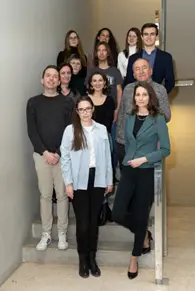
Group leader: Beata Lontay PhD
Group members: Andrea Kiss PhD Assistant professor
Ilka Keller MD PhD Research associate
Ferenc Erdődi PhD Professor emeritus
Zoltán Kónya PhD Research associate
Attila Makai MD PhD Pulmonologist/Oncologist
Ádám Ungvári MSc Research assistant
Petra Biró MSc PhD student
Zsófia Bodogán MSc PhD student
Richárd Kinter MSc PhD student
Mohamad Mahfood MSc PhD student
Laboratory assistants:
Ágota Kelemenné Szántó
Andrea Docsa
National Academy of Scientist Education (NASE):
Zoltán Ödön Nagyenyedi MD student
Botond Csongrádi MD student
Undergraduate Researchers
Blanka Kiss MD student
Nóra Ónodi-Szűcs DMD student
Sára Kocsi MSc student
Luca Janovák MSc student
Krisztina Berényi MSc student
Kincső Nagy MSc student
Sanour Tala Ali Mohamed MSc student

Post-Translational Modifications and Regulation of Myosin Phosphatase (MP)
The research group primarily investigates the pathobiochemical processes of post-translational modifications related to human diseases, such as reproductive disorders, insulin resistance, and tumor formation. We extensively study myosin phosphatase (MP), demonstrating that it coordinates with Rho-kinase (ROK) to regulate neurotransmitter release by dephosphorylating the SNAP-25 protein. In the field of gene expression, we discovered that MP inhibits the PRMT5 enzyme, thereby preventing the methylation of histone proteins and protecting tumor suppressor genes. This tumor-suppressing signaling pathway is further regulated by the PPM1B phosphatase, highlighting the potential of MP in future anti-cancer therapies. Through the examination of skin tissue, we proved that protein phosphatases are essential for maintaining epidermal homeostasis, driving cell proliferation, and ensuring proper wound healing. We also revealed that UV radiation negatively inhibits cell regeneration, while the lack of MP function leads to severe epidermal disturbances and delayed tissue repair.
Grants: NKFIH 109249, 129104
Representative papers:
Keller I, Ungvári Á, Major E, Horváth D, Kónya Z, Tóth E, Erdődi F, Kiss A, Lontay B. Magnesium-dependent-Protein Phosphatase 1B Regulates the Protein Arginine Methyltransferase 5 Through the Modulation of Myosin Phosphatase. J Biol Chem. 2024 Dec 18:108107. doi: 10.1016/j.jbc.2024.108107.
Horváth D, Sipos A, Major E, Kónya Z, Bátori R, Dedinszki D, Szöllosi A, TamásI, Iván J, Kiss A, Erdodi F, Lontay B. Myosin phosphatase accelerates cutaneous wound healing by regulating migration and differentiation of epidermal keratinocytes via Akt signaling pathway in human and murine skin. Biochim Biophys Acta Mol Basis Dis. 2018 Oct;1864(10):3268-3280. doi: 10.1016/j.bbadis.2018.07.013.
Sipos A, Iván J, Bécsi B, Darula Z, Tamás I, Horváth D, Medzihradszky KF, Erdődi F, Lontay B. Myosin phosphatase and RhoA-activated kinase modulate arginine methylation by the regulation of protein arginine methyltransferase 5 in hepatocellular carcinoma cells. Sci Rep. 2017 Jan 11;7:40590. doi: 10.1038/srep40590.
Smoothelin like protein 1 physiology and role in translational medicine
Another major research direction focuses on the SMTNL1 protein, which facilitates the necessary transformation of skeletal muscle to a glycolytic fiber type during pregnancy. We verified that SMTNL1 improves insulin sensitivity in muscle tissue and increases cellular glucose uptake by reducing the inhibitory phosphorylation of the IRS1 protein. The group discovered that this molecule operates via a dual mechanism, acting as an MP inhibitor in the cytosol and as a progesterone receptor cofactor in the cellular nucleus. In animal models, the absence of SMTNL1 caused reduced fertility and glucose intolerance, whereas its over-expression supported endometrial differentiation and protected reproductive functions. The protein also proved crucial in studying the muscle pathology of hyperthyroidism, where it successfully counteracted the hormone's effects that typically induce insulin resistance.
Grants: NKFIH 83938; 125043
Representative papers:
Major E, Győry F, Horváth D, Keller I, Tamás I, Uray K, Fülöp P, Lontay B. Smoothelin-Like Protein 1 Regulates Development and Metabolic Transformation of Skeletal Muscle in Hyperthyroidism. Front Endocrinol (Lausanne). 2021 Oct 5;12:751488. doi: 10.3389/fendo.2021.751488.
Lontay B, Bodoor K, Sipos A, Weitzel DH, Loiselle D, Safi R, Zheng D, Devente J, Hickner RC, McDonnell DP, Ribar T, Haystead TA. Pregnancy and Smoothelin-like Protein 1 (SMTNL1) Deletion Promote the Switching of Skeletal Muscle to a Glycolytic Phenotype in Human and Mice. J Biol Chem. 2015 Jul 17;290(29):17985-98. doi: 10.1074/jbc.M115.658120.
Tamas I, Major E, Horvath D, Keller I, Ungvari A, Haystead TA, MacDonald JA, Lontay B. Mechanisms by which smoothelin-like protein 1 reverses insulin resistance in myotubules and mice. Mol Cell Endocrinol. 2022 Jul 1;551:111663. doi: 10.1016/j.mce.2022.111663.
Targeted Melanoma Therapy
Furthermore, the team is investigating innovative cancer therapy methods, with a special focus on the targeted photoablation of malignant melanoma. In this approach, we utilize fluorophore-labeled specific inhibitors that bind to ectopic Hsp90 proteins appearing specifically on the surface of malignant cells. We observed that once internalized via endocytosis, these inhibitors can destroy cancer cells by generating reactive oxygen species upon exposure to near-infrared light. Based on these results, these novel compounds significantly impair the migratory and invasive capabilities of melanoma cells, providing a promising foundation for future targeted treatments.
Grants: NKFIH 143533
 Methodology
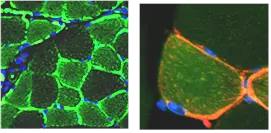
We demonstrate extensive expertise in advanced cell culture methodologies, including the maintenance of various human and mouse cell lines, cellular differentiation, gene silencing via siRNA, and the development of in vitro models for conditions like hyperthyroidism and insulin resistance. Furthermore, we are highly proficient in conducting in vivo animal studies using mouse models to evaluate reproductive fitness, track metabolic parameters via glucose tolerance tests and automated monitoring systems (CLAMS), and assess wound healing processes. Our background also highlights a deep specialization in biochemical and protein analysis, encompassing Western blotting, in vitro kinase and methyltransferase assays, immunoprecipitation, and assessing protein-protein interactions using complex methods like pull-down assays, Duolink PLA, and Surface Plasmon Resonance (SPR). Additionally, we are skilled in histological and microscopic evaluations, actively employing immunohistochemistry, immunofluorescence, and confocal microscopy to analyze both human clinical biopsies and targeted animal tissue samples. Finally, our technical repertoire is rounded out by functional cellular assays, such as real-time cell monitoring and impedance sensing (ECIS), paired with strong bioinformatic capabilities for transcriptomic microarray analysis.